Source


Pixlr is an free online photo editor that works great if your not on a pc that has photo editing software or if your restricted on a company computer.

Great place to keep track of your card collections online.


---------------------------------------------------------------------------------------
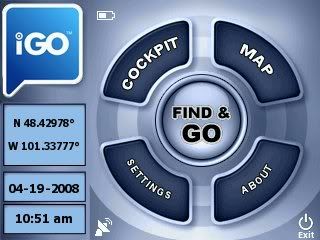
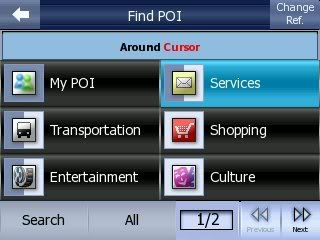
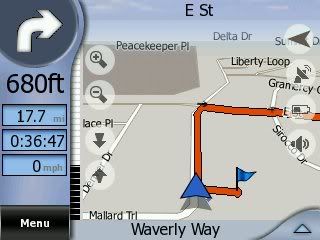
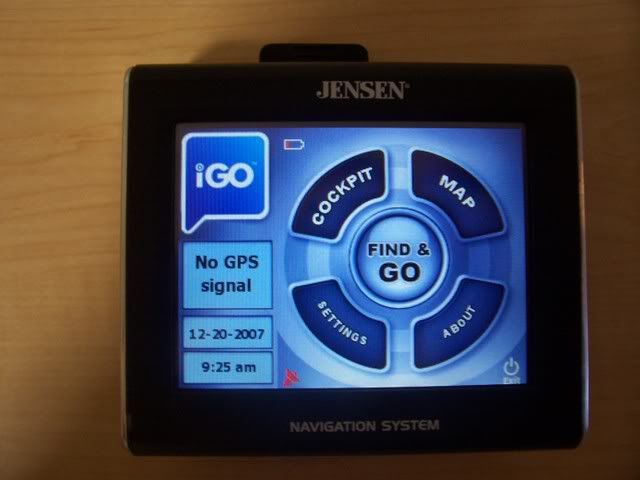
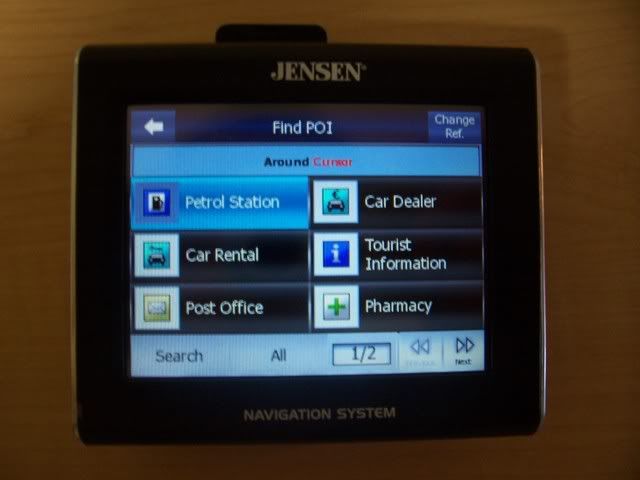
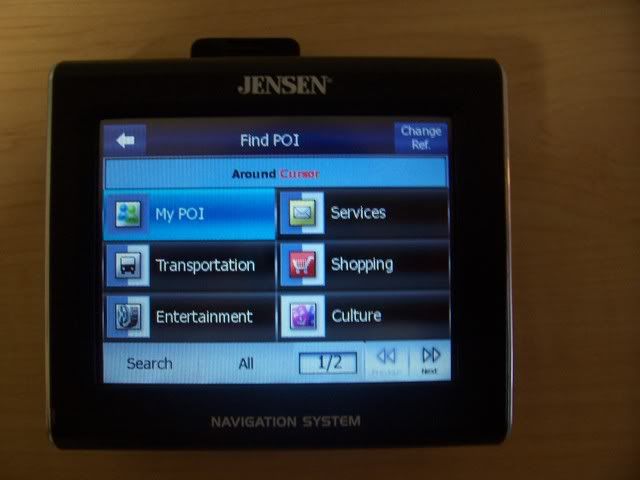
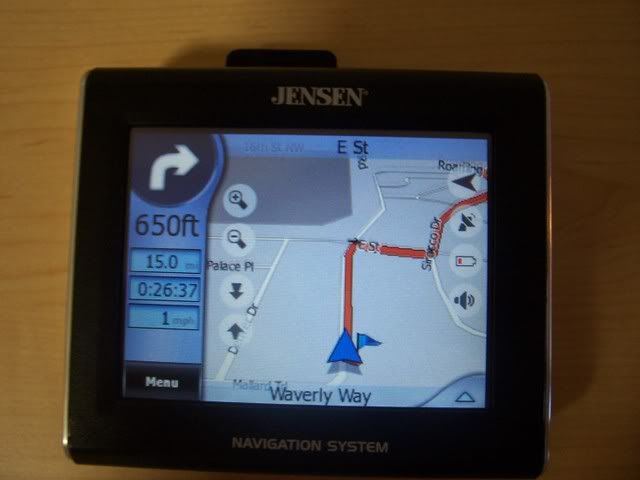
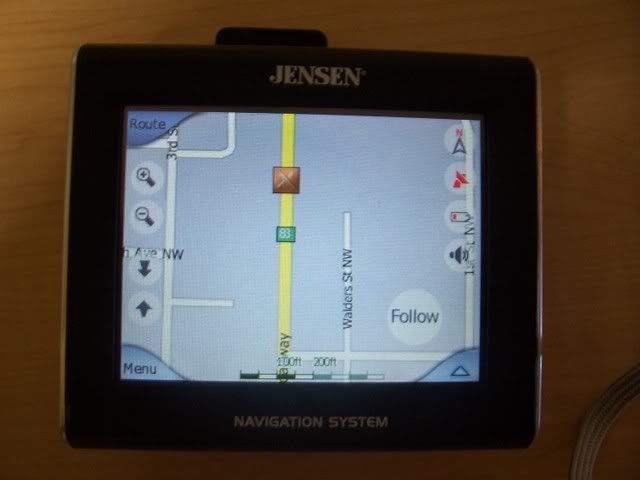
OK I got one of these units from Buy.com for $160 or so. Following the instructions here with some improvement I have managed to hack the NVX225 to allow explorer and media player access from the main menu.
As normal use at your own risk, this is what I did to the best of my recollection:
1) Install Active Sync From the companion CD to my PC.
2) Copy off IGOPATH.TXT from \MyFlashDisk
3) Changed the IGOPATH.TXT to add an explorer button
[modules]
Settings = "icons/settings.bmp", "settings", 1
Navigate = "icons/logo.bmp", "\\MyFlashDisk\\iGO\\igopna.exe"
Explorer = "icons/files.bmp", "\\Windows\\Explorer.exe"
4) Downloaded TCPMP 0.81RC1 from:
http://rapidshare.com/files/4852327/TCPMP_Media_Player_0.81RC1Beta.cab.html
And copied to an SD card on my PC
5) Remove SD Card from PC, Insert Into NVX225 and Restart the NVX225 using the slide seitch on the side.
6) Double click the new explorer button and go to SDMMC to find the .CAB file and Double click it. This installes the Media Player to Program Files, the problem with this is when I turned off the unit by the slide switch it would disappear. So....
7) Copy the PLAYER folder from the \Programs Files\TCPMP Media Player 0\ to your PC.
8) Copy it back to MyFlashDisk (Fortunatly there is 14MB left on the internal flash and the Media player is only 6MB or so.)
9) Re-Edit the IGOPATH.TXT so that it now looks like:
[modules]
Settings = "icons/settings.bmp", "settings", 1
Navigate = "icons/logo.bmp", "\\MyFlashDisk\\iGO\\igopna.exe"
Explorer = "icons/files.bmp", "\\Windows\\Explorer.exe"
Multimedia = "icons/media.bmp", "\\MyFlashDisk\\PLAYER\\PLAYER.exe"
10) Re Upload IGOPATH.TXT file to the NVX225 and restart the device using the slide switch on the side.
You should now have a working media player. I have tested with FLAC, MP3, JPEG slide show and a short video and they all seem to work OK.
NOTES
Try as I might I could not get the Player to work fully when placed on the SD Card. It would run if I double clicked it from explorer but I could not get the Button on the Menu to work from the SD Card.
I also placed the C310 utilities programs (see higher in this thread for link) and most work fine from explorer (Rotate, Screen and a few others fail)
Some of the above C310 Utilities also overflow the screen
GpsPasSion Forums - Jensen NVX225 3.5'' GPS by Audiovox
Blogged with the Flock Browser

Navigon today announced NAVIGON 2100 max, a personal navigation device (PNDs) at CeBIT 2008 in Hannover, Germany to bring high end navigation features to the 2100 series line.
Navigon 2100 max include a 4.3″ screen, spoken driving directions via text to speech, and of course the brand exclusive Reality View, which provides 3D guidance around freeway intersections.
What Navigon also announced today with the release of 2100 max and 2120 max was the FreshMaps service. FreshMaps provides up to 12 map and POI updates in three years which normally costs $80 if you buy it directly.
The Navigon 2100 max comes with maps of the continental U.S. and will cost $300
Other features we haven’t mentioned include:
In addition you can add Navigon’s life time real time traffic updates for $100, and Zagat survey ratings and reviews for $40.
Geocaching is an outdoor treasure-hunting game in which the participants use a Global Positioning System (GPS) receiver or other navigational techniques to hide and seek containers (called "geocaches" or "caches") anywhere in the world. A typical cache is a small waterproof container containing a logbook and "treasure," usually toys or trinkets of little value. Today, well over 480,000 geocaches are registered on various websites devoted to the sport. Geocaches are currently placed in over 100 countries around the world and on all seven continents, including Antarctica.[1]
For the traditional geocache, a geocacher will place a waterproof container, containing a log book (with pen or pencil) and trinkets or some sort of treasures, then note the cache's coordinates. These coordinates, along with other details of the location, are posted on a website. Other geocachers obtain the coordinates from the Internet and seek out the cache using their GPS handheld receivers. The finding geocachers record their exploits in the logbook and online. Geocachers are free to take objects from the cache in exchange for leaving something of similar or higher value, so there is treasure for the next person to find.
Microcache hidden and found beside the Roman Colosseum
Microcache hidden and found beside the Roman Colosseum
Typical cache treasures are not high in monetary value but may hold personal value to the finder. Aside from the logbook, common cache contents are unusual coins or currency, small toys, ornamental buttons, CDs, or books. Also common are objects that are moved from cache to cache, such as Travel Bugs or Geocoins, whose travels may be logged and followed online. Occasionally, higher value items are included in geocaches, normally reserved for the "first finder", or in locations which are harder to reach.
Geocaches can range in size from "microcaches," too small to hold anything more than a tiny paper log, to those placed in five-gallon buckets or even larger containers. [4]
If a geocache has been vandalized or stolen, it is said to have been "muggled" or "plundered." The former term plays off the fact that those not familiar with geocaching are called "geo-muggles" or just muggles, a term borrowed from the Harry Potter series of books.[5]
If a cacher discovers that a cache has been muggled, it can be logged as needing maintenance, which sends an e-mail to the cache owner so it can be repaired, replaced, or archived (deactivated).